 Back
Back



×



 Use this button to Sign In a OceanSpin partner account.

Use this button to Sign In a Jungliwin partner account.

Use this button to create OceanSpin a partner account.
Use this button to create Jungliwin a partner account.
 19 JANUARY 2026
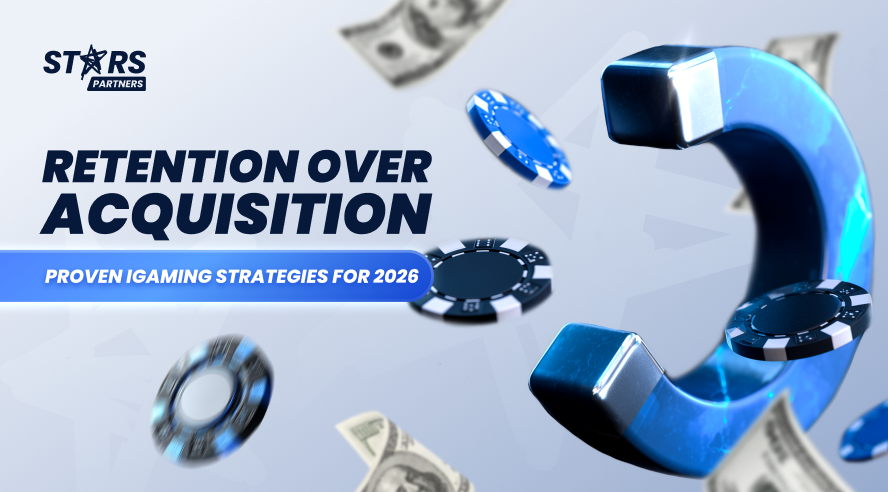
Traffic is getting more expensive, players are leaving faster, and old growth models no longer scale. Retention has become the real battleground in iGaming.
In this article, we break down what actually works in 2026 — from CRM and communication to personalization, loyalty, and the metrics that matter.
In 2026, buying traffic is no longer a growth strategy — it's a cost center. The brands that scale are not the ones chasing more clicks, but the ones keeping players active, engaged, and returning. Retention has moved from a "nice to have" to the core lever of profitability in iGaming.
Traffic costs continue to rise across all major channels, while user attention is fragmented and short-lived. The market is overcrowded with similar offers, mechanics, and bonuses, making it harder to stand out at the acquisition stage. As a result, first deposits happen faster — and churn occurs even quicker.
This is why operators are shifting focus from FTD-driven models to long-term player value. Retention strategies built around smart CRM, relevant communication, and personalized journeys enable brands to monetize the same audience multiple times rather than constantly replacing it.
In 2026, winning means understanding player behavior beyond the first session — and designing systems that turn activity into habit, not just a one-time conversion.
In modern iGaming, CRM is no longer a support tool — it's the engine behind retention. A well-built CRM system allows operators to understand not just who the player is, but how and why they play.
Segmentation is the foundation. By grouping players based on behavior, value, and engagement patterns, brands can stop sending generic messages and start delivering relevant ones. High-value players, casual users, and reactivated churned players all require different logic — and CRM makes that distinction scalable.
Automation turns insight into action. Trigger-based scenarios handle onboarding, re-engagement, bonus reminders, and milestone rewards without manual intervention. Communication becomes timely, consistent, and aligned with player intent.
Most importantly, CRM connects every interaction to the player lifecycle. From first session to long-term loyalty, operators can see where players drop off, where they accelerate, and where retention needs reinforcement — turning raw data into predictable, repeatable growth.
Push and email still drive retention — but only when used with intent. Mass campaigns and blanket bonus blasts no longer work. Players expect relevance, not noise, and modern CRM finally makes that achievable.
The strongest results come from personalized triggers tied to real behavior: a session drop-off, a favorite game update, a missed tournament, or a change in play frequency. These messages feel timely because they respond to real player behavior — not because someone scheduled them on a calendar. Relevance beats reach every time.
Timing and frequency are just as critical. Too many messages kill engagement; too few make the brand invisible. High-performing operators adapt cadence to player segments, allowing active users more touchpoints while giving casual players space. CRM-driven throttling prevents fatigue without losing momentum.
Finally, content matters more than ever. Bonuses alone don't build loyalty. Educational tips, game highlights, progress updates, and achievement-based messaging create context and emotion — turning communication into value rather than just an incentive.
In 2026, personalization isn't a competitive advantage — it's the baseline. Players expect platforms to adapt to them, not the other way around. Generic offers and static lobbies break engagement faster than no incentive at all.
Effective personalization starts with individual offers. Bonuses, cashback, and rewards should reflect how a player actually behaves — not an average segment. When incentives align with play style and spending patterns, they feel relevant rather than transactional.
Game recommendations follow the same logic. Smart platforms surface titles based on real preferences, session history, and momentum, reducing choice overload and keeping players in a flow state. The goal isn't to show more games, but to show the right ones at the right moment.
Adaptation also extends to preferences and market context. Language, content format, timing, and cultural nuances shape how players perceive value. When experiences feel familiar and intuitive, trust grows — and retention follows.
Personalization in 2026 is about designing experiences that feel intentional rather than automated.
Next-generation loyalty programs in iGaming are shifting from short-term incentives to structured, long-term engagement. One-off bonuses may trigger activity, but they rarely build commitment. Status-based systems do.
Modern loyalty models use levels, progression, and clear milestones to drive engagement. Players don't just receive rewards — they unlock them. Status tiers create a sense of achievement and continuity, encouraging players to stay active to maintain or improve their position.
Non-monetary rewards play a growing role. Early access to features, exclusive tournaments, personalized support, and recognition within the platform often outperform cash-based bonuses. These benefits signal value and trust, not just spending power.
The real strength of advanced loyalty programs lies in long-term motivation. When progression is visible and rewards evolve, players develop habits rather than chasing promotions. In 2026, loyalty isn't about giving more — it's about giving players a reason to stay.
Poor retention execution makes even strong products lose players. The most common mistakes are simple — and costly.
Retention doesn't fail because of missing tools. It fails when behavior, data, and long-term value don't drive decisions.
Retention only works when it's measurable. In 2026, successful iGaming teams track a small set of core metrics and connect them to real business outcomes — not vanity dashboards.
Shows how many players stay active over a defined period.
Formula:
Retention Rate (%) = (Active players at end of period ÷ Players at start of period) × 100
This metric answers a simple question: Are players coming back after their first sessions?
Measures the total revenue a player generates over time.
Formula:
LTV = Average Revenue per User × Average Player Lifetime
Retention directly extends player lifetime — making LTV one of the most retention-sensitive metrics.
Indicates how many players stop playing.
Formula:
Churn Rate (%) = (Lost players ÷ Total players at start of period) × 100
Lower churn means healthier retention mechanics.
Track how players interact with the product:
Engagement metrics explain why retention numbers move — and where to optimize next.
Ready to turn retention into long-term growth?
Partner with Stars Partners and work with a team that understands player behavior, CRM strategy, and sustainable monetization. We help brands scale smarter, not louder — through data, innovation, and real retention expertise. Let's build growth that lasts.